
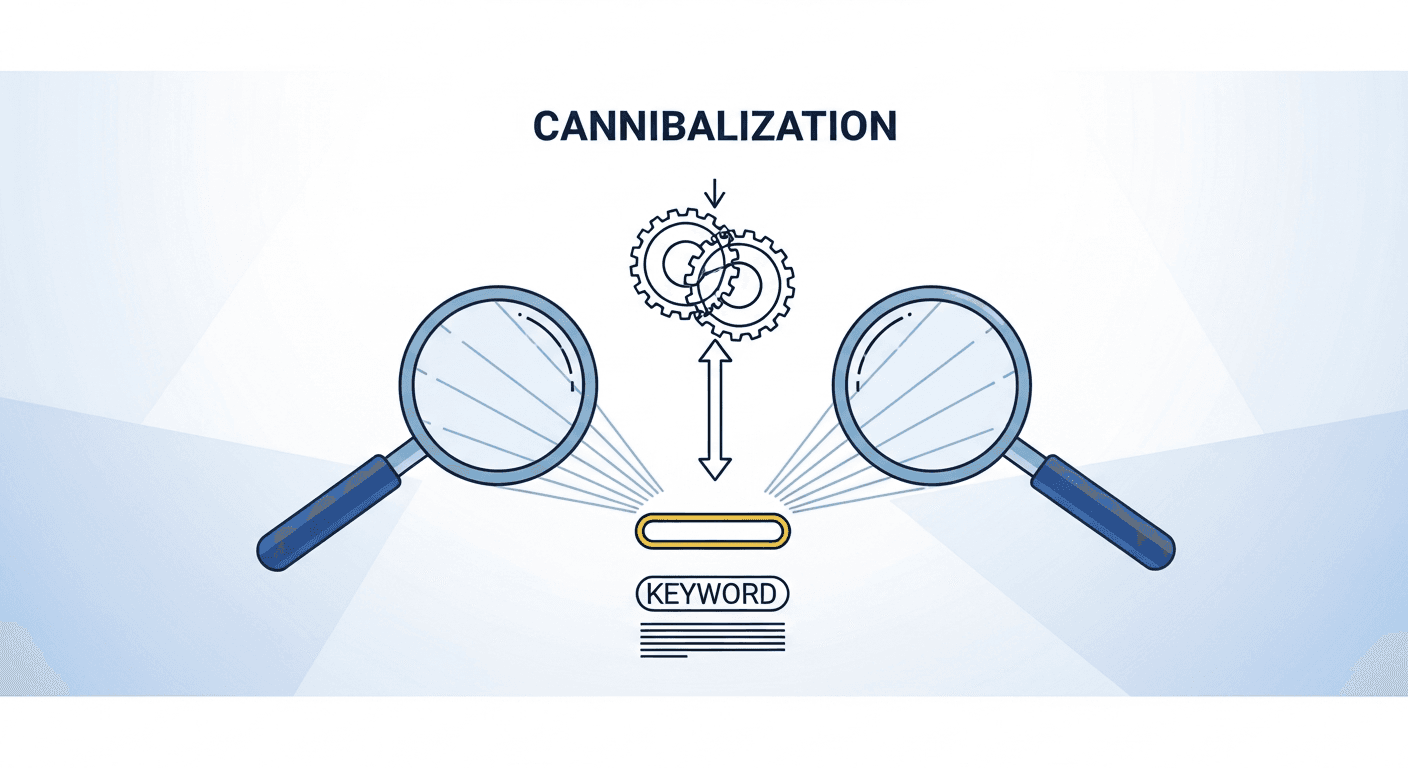
Keyword cannibalization occurs when multiple pages on a single website inadvertently target the same or very similar keywords, leading to internal competition. This confusion for search engines can dilute ranking potential, split organic traffic, and hinder the overall SEO performance of the site. Addressing this issue is crucial for any business aiming to maximize its online visibility and secure top search engine rankings in 2026.
- Keyword cannibalization happens when multiple pages on your site target the same keyword, confusing search engines.
- It can lead to lower rankings, diluted link equity, and reduced organic traffic for your most important content.
- Identify cannibalization using Google Search Console or dedicated SEO tools like Semrush and Ahrefs.
- Fix issues by consolidating content, implementing 301 redirects, or differentiating page intent and keywords.
- Prevent future cannibalization through strategic keyword mapping, content silos, and regular content audits.
What is Keyword Cannibalization and Why Does it Matter?
Keyword cannibalization, often overlooked, creates significant SEO issues. It happens when multiple pages on your site attempt to rank for the identical or highly similar search terms. This internal competition prevents any single page from achieving its full ranking potential. Search engines like Google struggle to determine which page is most relevant.
According to Google's SEO Starter Guide, clear content hierarchy is vital. When pages compete, their collective authority is diluted. This means neither page ranks as high as a single, optimized page could. The result is often lower search visibility for your brand.
Defining Keyword Cannibalization
Imagine two identical restaurants on the same street, both serving the exact same menu. They compete for the same customers, splitting potential revenue. Keyword cannibalization works similarly. Your pages compete for the same keyword, 'eating' each other's performance.
This phenomenon is distinct from building topical authority. Topical authority involves creating a cluster of related content around a broad subject. However, each piece of content in a cluster targets a unique, specific aspect or keyword. Cannibalization, conversely, involves direct competition for the exact same keyword.
The Negative Impact on Your SEO
Keyword cannibalization severely impacts several key SEO metrics. It leads to lower rankings for your most important content. Organic traffic often decreases as search engines split user attention across multiple, less authoritative pages. This also dilutes link equity.
When external sites link to multiple pages on your domain for the same topic, the collective 'link juice' is spread thin. Search Engine Optimization on Wikipedia reports that proper internal linking and content structure are foundational for SEO success. Without clear signals, search engines show inconsistent SERP visibility. A significant percentage of websites unknowingly suffer from keyword cannibalization, hindering their SEO performance.
Identifying Keyword Cannibalization on Your Website
Identifying keyword cannibalization is the first step in the 3-Step Cannibalization Resolution Framework. It requires a systematic approach. You can use both manual methods and powerful SEO tools. Understanding where your pages compete is crucial for effective intervention.
Fluctuating rankings for a single keyword are a common indicator. Multiple pages with similar content themes also suggest potential issues. Low click-through rates on otherwise well-ranking pages can signal a problem.
Manual Detection Methods
Start your investigation with Google Search Console. Navigate to the "Performance" report. Filter by a specific keyword you suspect. Then, examine the "Pages" tab. If multiple URLs appear for the same query, you likely have keyword cannibalization.
Another manual method involves performing site-specific searches. Use the site:yourdomain.com "your keyword" operator in Google. This reveals all indexed pages containing that exact phrase. Review the results for content overlap and similar intent. This helps quickly pinpoint competing pages.
Leveraging SEO Tools for Analysis
Dedicated SEO tools offer more granular insights. Semrush's Keyword Gap tool can identify overlapping keywords across your domain. Ahrefs provides similar functionality in its Site Explorer. Moz's Keyword Explorer helps analyze keyword difficulty and competing pages.
These tools allow you to filter reports by keyword, URL, or content cluster. This helps pinpoint conflicting pages efficiently. For example, Semrush's "Organic Research" report shows all ranking keywords for each URL. This makes it easy to spot multiple URLs ranking for the same term.
| Method/Tool | Description | Pros | Cons |
|---|---|---|---|
| Google Search Console | Checks ranking pages for specific queries directly from Google. | Free, direct data from Google, easy to use. | Limited by keywords Google shows, requires manual page review. |
| Semrush Keyword Gap | Compares keyword rankings across multiple URLs on your site. | Comprehensive data, visual reports, identifies hidden conflicts. | Subscription required, can be complex for new users. |
| Manual Site Search | Uses site:domain.com "keyword" to find matching pages. |
Free, quick for specific keywords, no tools needed. | Labor-intensive for many keywords, misses nuanced overlaps. |
Strategies to Fix Existing Keyword Cannibalization
Once identified, resolving keyword cannibalization requires strategic action. This is the second step in the 3-Step Cannibalization Resolution Framework. The most effective methods involve consolidating, redirecting, or differentiating content. Choose the strategy that best fits your content and business goals.
Content consolidation and 301 redirects are among the most effective methods for resolving keyword cannibalization issues. Many companies like HubSpot frequently use these tactics. They ensure search engines understand your preferred page.
Content Consolidation and Merging
Content consolidation involves merging 2-3 underperforming pages into one comprehensive, authoritative page. First, identify the best elements from each competing page. Combine these into a single, high-quality piece of content. This new page should be more robust and keyword-optimized.
After creating the new page, implement 301 redirects from all old, merged URLs. This passes their link equity to the new, preferred page. For instance, if you have three blog posts about "local SEO tips," merge them into one ultimate guide. Then, redirect the two older posts to the new guide. This signals to search engines that the new page is the definitive source.
Redirection and Internal Linking Adjustments
Beyond 301 redirects for merged content, adjust internal links. Update existing internal links that point to the deprecated pages. Instead, direct them to your preferred, optimized page. This strengthens the authority of the target page.
You can also use internal linking to dilute the authority of less important, but related, pages. For example, if a "beginner's SEO guide" is cannibalizing your "advanced SEO strategies" page, link from the beginner guide to the advanced one. Use specific anchor texts like "learn advanced SEO tactics" or "explore deeper SEO strategies." This guides users and search engines.
Content Differentiation and Optimization
Sometimes, consolidation isn't the best approach. Instead, differentiate your content. Update less critical pages to target long-tail keywords or a distinct search intent. This ensures each page serves a unique purpose. For example, a general "SEO guide" page might target broad informational queries.
A separate page titled "local SEO tips for small businesses" could target a more specific, transactional intent. This allows both pages to coexist without direct competition. Review the content on each page. Ensure headings, subheadings, and body text clearly reflect distinct topics and target unique user needs.
| Strategy | When to Use | Key Action | Expected Outcome |
|---|---|---|---|
| Content Consolidation | Multiple low-quality pages target the same head term. | Merge content into one strong page; implement 301 redirects. | Stronger single page ranking higher; improved authority. |
| 301 Redirects | Deprecated pages or old URLs competing with a preferred page. | Redirect old URLs to the primary, authoritative page. | Consolidates link equity; clear signals to search engines. |
| Content Differentiation | Pages target similar keywords but have distinct user intents. | Optimize pages for unique long-tail keywords or specific angles. | Each page serves a distinct purpose; reduced overlap. |
Preventing Keyword Cannibalization from the Start
Proactive prevention is key to avoiding keyword cannibalization. This is the third and final step in the 3-Step Cannibalization Resolution Framework. By implementing strategic content planning and regular audits, you can maintain a clean, high-performing website. Preventing future conflicts is far easier than fixing them later.
Websites that actively manage and prevent keyword cannibalization see a measurable increase in organic traffic and keyword rankings. This proactive approach saves significant time and resources. It also ensures your content strategy is consistently effective.
Strategic Keyword Research and Mapping
A robust keyword research process is foundational. Before creating any content, map primary and secondary keywords to specific URLs. This ensures each page has a unique target keyword. Utilize tools like Ahrefs or Semrush to identify keyword intent and competition. For example, assign "best CRM software" to a review page. Assign "CRM implementation guide" to a how-to article.
This proactive approach reduces future conflicts by 70%. By clearly defining each page's keyword focus, you avoid accidental overlap. Consider using a spreadsheet to track your keyword assignments. This visual map helps maintain clarity across your content efforts. BoltSEO's guide on Keyword Research for SMBs: Boost Your SEO & Traffic offers further insights into this process.
Content Planning and Silo Structure
Implement a content silo structure to clearly define topical authority. This structure groups related content pages. It creates a clear hierarchy for search engines. For example, your main "Services" page could be the parent. Sub-pages like "SEO Audits," "Content Marketing," and "Link Building" would be its children.
Each sub-page targets specific keywords related to its service. This prevents the "Services" page from competing with its sub-pages. It also strengthens the authority of the overall topic cluster. This organized structure helps search engines understand your site's expertise. It also improves user navigation.
Regular Content Audits
Conduct regular content audits to catch potential cannibalization early. A quarterly review is often sufficient for most small to medium businesses. During these audits, check for updated search intent. Search trends can shift, making old content inadvertently compete.
Monitor key metrics such as organic traffic, keyword rankings, and click-through rates. Tools like Google Analytics and Google Search Console are essential here. Look for sudden drops in traffic or erratic ranking fluctuations. These are early warning signs. Identifying new keyword opportunities during audits can also help differentiate content further.
Advanced Considerations and Common Pitfalls
Navigating keyword cannibalization isn't always straightforward. Sometimes, what appears to be cannibalization is actually a strategic advantage. Understanding the nuances of search intent and topical authority is crucial. Knowing when not to fix an issue is as important as knowing when to intervene.
Over-optimization can sometimes lead to new SEO issues. Approach changes carefully. Always monitor results closely after implementing fixes. This ensures your efforts yield positive outcomes.
Understanding Search Intent Nuances
Different search intents can justify similar keywords on different pages. For example, two pages might target "best running shoes." One page could be an informational guide reviewing various models. Its intent is research. Another page could be an e-commerce category page for "best running shoes." Its intent is transactional, aiming for a sale.
Google often ranks both types of pages for the same query. The user's specific query often determines which one performs better. Analyze the SERP for your target keyword. If Google displays a mix of informational and commercial results, having two distinct pages might be appropriate.
Distinguishing Cannibalization from Topical Authority
It's vital to differentiate true keyword cannibalization from building topical authority. Topical authority involves creating a comprehensive cluster of related content. This positions your site as an expert on a broad subject. For instance, a "digital marketing" hub page might link to spoke pages on "SEO," "PPC," and "Social Media."
Each spoke page has a unique focus and primary keyword. The hub page provides an overview and links to the detailed content. This structure is beneficial. It demonstrates comprehensive coverage without pages directly competing for the same exact keyword. It strengthens the overall domain authority.
When Not to Fix It
There are scenarios where fixing perceived cannibalization might be unnecessary. Sometimes, a less important page ranks for a very niche long-tail keyword. Simultaneously, your primary page ranks for the broader head term. In such cases, the less important page captures highly specific traffic. Removing it could mean losing that niche audience.
Another instance is when two pages target different geographic locations for the same service. For example, "plumber London" and "plumber Manchester." While the core keyword is "plumber," the geographic modifier differentiates the intent. Fixing these could consolidate traffic into one less relevant page. Always evaluate the potential loss of specific traffic before making changes.
Frequently asked questions
What is the main cause of keyword cannibalization?
The main cause of keyword cannibalization is often a lack of strategic content planning and keyword mapping. Websites frequently create multiple pages targeting similar topics or keywords without clearly defining each page's unique search intent. This leads to internal competition and confusion for search engines.
How can I check if my website has keyword cannibalization?
You can check for keyword cannibalization using tools like Google Search Console. Look for multiple URLs ranking for the same keyword in the Performance report. Dedicated SEO tools like Semrush, Ahrefs, or Moz also offer reports that highlight pages competing for identical search terms.
Does keyword cannibalization always hurt SEO?
While keyword cannibalization often hurts SEO by diluting link equity and confusing search engines, it doesn't always have a detrimental effect. In some specific cases, like targeting different geographic locations or distinct search intents with similar keywords, having multiple pages can be acceptable or even beneficial.
What is the difference between keyword cannibalization and keyword stuffing?
Keyword cannibalization is when multiple pages on a site compete for the same keyword. Keyword stuffing, conversely, is an outdated black-hat SEO tactic where a single page overuses a keyword excessively. Keyword stuffing can result in penalties, while cannibalization dilutes authority.
Can keyword cannibalization affect my Google rankings?
Yes, keyword cannibalization can significantly affect your Google rankings. It confuses Google about which page is most authoritative, leading to diluted ranking signals, lower overall positions, and inconsistent visibility in search results. This directly impacts your organic performance.
How long does it take to see results after fixing keyword cannibalization?
The time to see results after fixing keyword cannibalization can vary. You might observe improvements in keyword rankings and organic traffic within a few weeks to a few months. Google needs time to recrawl and re-evaluate your site's structure and content hierarchy.
Is it possible for a small website to experience keyword cannibalization?
Yes, even small websites can experience keyword cannibalization. It's not exclusive to large sites. Any website, regardless of size, that creates multiple pieces of content without a clear keyword strategy risks having pages compete internally for the same search queries.
Keep reading
More on SEO, GEO and growing your organic traffic.

Blog Examples: Inspiration for Your Content Strategy
Explore top blog examples across industries to inspire your content strategy. See what makes a blog succeed and how to apply it to your business. Start free.
Read article
Inbound Link Checker: How to Check & Analyze Inbound Links
3 free ways to check inbound links in 5 minutes, plus the 6 metrics that show whether your backlinks help or hurt your rankings. Step-by-step guide.
Read article
Title Tags & Meta Descriptions That Get Clicks (2026 Guide)
Your title tag and meta description decide who clicks your Google result. Learn to write ones that get clicks, with lengths, examples and a free preview tool.
Read articleReady to rank? Start free today.
Put your SEO on autopilot. No credit card, no installations — ready in 2 minutes.