
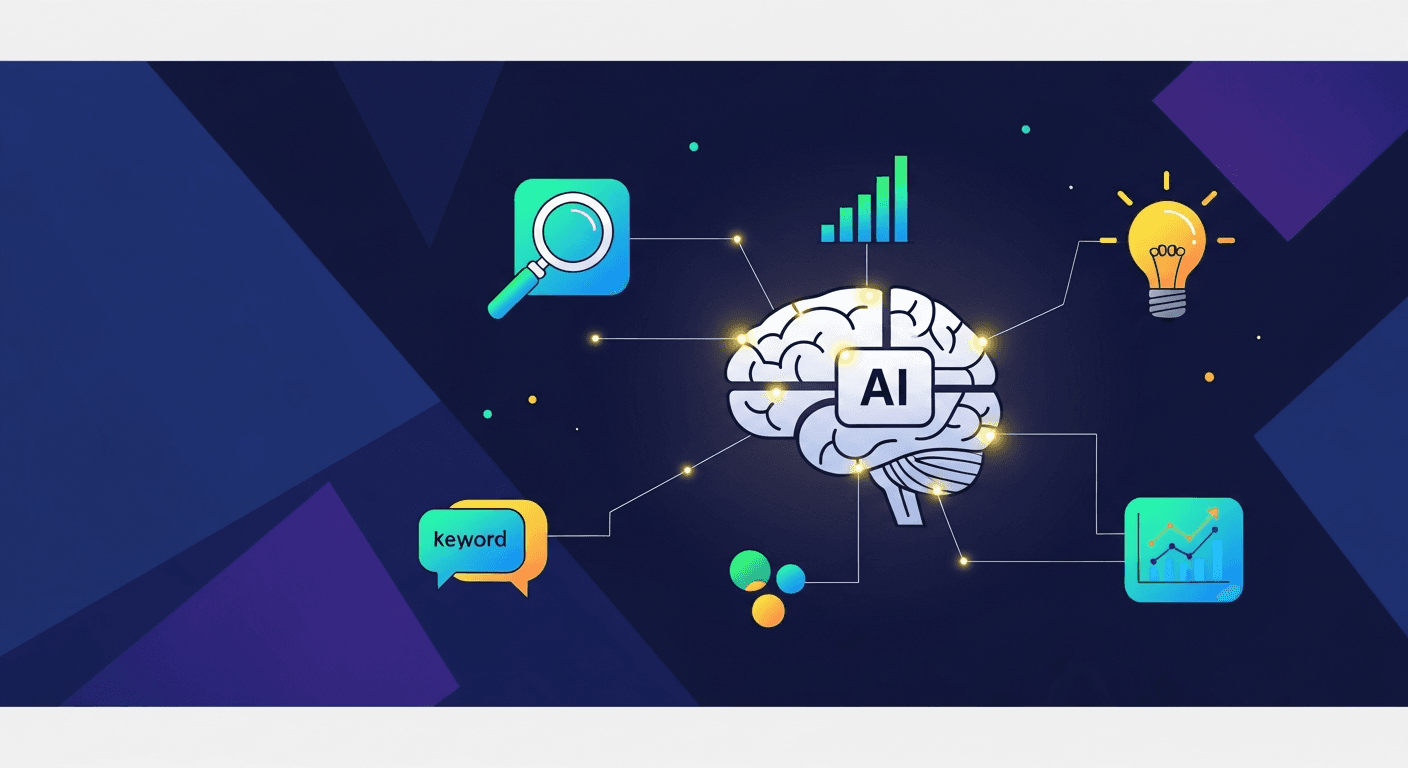
Keywords for Smarter SEO: AI-Powered Strategies for Growth
You know keywords are vital for SEO, but the endless spreadsheets and manual analysis can feel like a never-ending chore. The promise of visibility is real, yet the time investment often feels unsustainable. What if there was a smarter way to find and leverage keywords, transforming your SEO efforts from a burden into a powerful growth engine?
Keywords for smarter SEO involve leveraging artificial intelligence to move beyond basic keyword matching. This approach focuses on understanding user intent, identifying semantic relationships, and discovering high-impact, low-competition keyword clusters to drive more relevant traffic and improve search engine rankings efficiently.
- Smarter SEO keywords move beyond exact-match to semantic understanding and user intent, driven by AI.
- AI tools uncover hidden long-tail opportunities and predict future keyword trends that manual research often misses.
- Intent-driven keyword grouping and content clustering are crucial for building topical authority and ranking for diverse queries.
- Automating keyword integration from research to publishing with AI platforms like BoltSEO streamlines the entire SEO content workflow.
- AI helps businesses avoid common pitfalls like over-targeting high-volume keywords and ensures keyword strategies remain adaptive and effective.
The Evolution of Keyword Research: Beyond Basic Matching
Keyword research has undergone a significant transformation. Gone are the days of simply stuffing keywords. Modern SEO demands a deeper understanding of user intent. Search algorithms have become increasingly sophisticated.
From Keyword Stuffing to Semantic Understanding
Early SEO focused on exact keyword matches. Websites would often repeat target keywords excessively. This practice, known as keyword stuffing, aimed to trick search engines. However, Google's algorithms evolved. According to Search engine optimization, updates like Hummingbird in 2013 shifted focus. The emphasis moved towards understanding the meaning behind queries.
The Rise of AI in Search Engine Algorithms
AI now plays a central role in how search engines interpret queries. Google's RankBrain, introduced in 2015, uses machine learning. It helps process unfamiliar search queries. This AI component interprets user intent beyond literal keywords. It connects diverse search terms to relevant content.
Why Traditional Keyword Tools Fall Short for Modern SEO
Traditional keyword tools often present data on volume and difficulty. While useful, this data alone is insufficient. Relying solely on these metrics can lead to missed opportunities. A high-volume keyword might have intense competition. A low-volume long-tail keyword could drive highly qualified traffic. Tools like Semrush and Ahrefs offer robust data. Yet, human interpretation is still required. This is where AI excels. It processes vast datasets more efficiently.
AI-Powered Keyword Discovery: Uncovering Hidden Opportunities
AI significantly enhances keyword discovery. It moves beyond simple data aggregation. Machine learning algorithms provide deeper insights. They identify patterns humans often miss.
Leveraging Machine Learning for Deeper Insights
AI employs several techniques for smarter keyword discovery. Natural language processing (NLP) helps understand the context of queries. Clustering algorithms group semantically related keywords. Topic modeling identifies overarching themes within search data. Semrush reports that AI in SEO is crucial for processing vast amounts of data. This allows for a more nuanced understanding of search intent.
Identifying Keyword Gaps and Untapped Niches
AI can pinpoint lucrative keyword gaps. Imagine a small business selling artisanal chocolate. A human might target "gourmet chocolate." AI, however, could uncover "single-origin dark chocolate subscription box UK." This long-tail cluster has lower competition. It targets a specific audience with clear commercial intent. This is a powerful advantage.
Predictive Analytics for Future Keyword Trends
AI also provides predictive analytics. It analyzes emerging search patterns. This helps anticipate future keyword relevance. For instance, AI might have flagged "sustainable packaging solutions" as a rising trend in 2020. This would have given businesses a two-year head start. This predictive capability is invaluable for staying ahead.
The tell: If you're not anticipating future trends, you're always playing catch-up.
Intent-Driven Keyword Grouping: Structuring Content for Authority
Understanding user intent is paramount. Keywords are not isolated terms. They reflect stages in a customer's journey. Grouping them intelligently builds topical authority.
Mapping Keywords to User Journey Stages
Different keywords serve different purposes. They align with distinct user journey stages.
| User Journey Stage | Keyword Intent | Example Keyword Type | Content Goal |
|---|---|---|---|
| Awareness | Informational | 'What is AI SEO' | Educate, attract new audience |
| Consideration | Commercial | 'Best AI keyword tool' | Provide solutions, build trust |
| Decision | Transactional | 'BoltSEO pricing' | Convert, facilitate purchase |
| Retention | Navigational | 'BoltSEO login' | Support, foster loyalty |
This structured approach ensures content addresses specific needs. It guides users through their decision-making process.
Building Comprehensive Content Clusters
Content clusters are central to modern SEO. A primary keyword, like "AI content generation," forms the core. Supporting long-tail keywords then branch out. These might include "AI blog post writer," "AI article creation tools," or "how AI writes SEO content." This strategy builds topical authority. It tells search engines your site is a comprehensive resource. This boosts rankings for a wider range of queries.
Optimizing for Conversational Search and Voice SEO
Conversational search is growing rapidly. A significant portion of search queries now involve voice search. Voice assistants like Siri and Alexa process natural language. AI-driven keyword research helps optimize for these queries. It identifies longer, more natural phrases. This ensures your content answers questions directly. For example, instead of "weather," people ask "What's the weather like in Brussels today?"
Automating Keyword Integration: From Research to Publication
Automating keyword integration streamlines the entire SEO workflow. It frees up valuable time. AI handles repetitive tasks with precision.
Streamlining Content Creation with AI
The AI-Driven Keyword Optimization Cycle is a powerful workflow. First, AI discovers high-impact keywords. Second, it generates content outlines based on these keywords. Third, it drafts SEO-optimized content. BoltSEO, for example, automates these steps. This process ensures keywords are naturally integrated. According to data, automating keyword integration and content generation can reduce the time spent on SEO tasks by a substantial margin, often exceeding 60%.
Ensuring On-Page Optimization at Scale
AI platforms ensure optimal keyword density and placement. They prevent over-stuffing. An AI might generate a meta description like: "Discover how BoltSEO uses AI for smarter SEO keywords. Automate your keyword research and content creation for unprecedented growth in 2026." It understands context. This ensures every piece of content is perfectly optimized. This applies to H1 tags, body text, and image alt attributes.
Measuring Impact and Iterating with AI Analytics
AI analytics track the effectiveness of your keyword strategy. Key metrics include organic traffic, ranking positions, and conversion rates. BoltSEO provides detailed reports. These insights allow for continuous iteration. If a keyword isn't performing, AI suggests alternatives. This ensures your strategy remains dynamic and effective. Check out our AI-Powered Content Generation Guide for more.
Common Pitfalls and How AI Helps Avoid Them
Even experienced marketers fall into common keyword traps. AI acts as a safeguard. It helps businesses navigate complex SEO landscapes.
Over-reliance on High-Volume Keywords
Targeting only high-volume keywords is a classic mistake. A small business selling custom-made leather bags might target "leather bags." This is highly competitive. They would likely struggle to rank. Instead, AI could identify "handmade Italian leather tote bag with personalized engraving." This targets a niche. It attracts highly qualified leads, leading to better conversion rates.
Ignoring Local and Niche-Specific Terms
Many businesses overlook local SEO. AI can automatically identify relevant local keywords. For a coffee shop in Brussels, AI suggests "best coffee Brussels city center" or "vegan friendly cafe near Grand Place." Similarly, for niche markets, AI uncovers highly specific terms. Think "biodegradable dog waste bags for urban living." These terms drive very specific, valuable traffic.
Stagnant Keyword Strategies
SEO is not a one-time task. Keyword strategies must evolve. Without continuous monitoring, they become outdated. AI platforms like BoltSEO continuously monitor keyword performance. They track ranking fluctuations. They suggest new opportunities. This proactive approach prevents your keyword strategy from becoming stagnant. It ensures sustained organic growth.
Future-Proofing Your SEO with AI-Driven Keywords
The search landscape is always changing. AI-driven keywords offer a robust solution. They ensure your SEO remains resilient and effective.
Adapting to Evolving Search Landscapes
AI-powered keyword research helps businesses stay ahead. It anticipates algorithm changes. For instance, if Google prioritizes video content, AI identifies video-specific keywords. This adaptive strategy ensures you're always optimized. It provides a significant competitive edge.
The Synergy of Human Expertise and AI Efficiency
The ideal approach combines human insight with AI efficiency. Humans define strategic goals. AI handles the heavy lifting of data analysis. It reduces research time by over 70%. This allows human teams to focus on creativity. They develop compelling content. This synergy is powerful.
Implementing BoltSEO for Continuous Growth
BoltSEO offers a comprehensive solution for smarter SEO with keywords. Its features include automated keyword analysis, AI-powered content generation, and seamless publishing. It allows businesses to fully automate their SEO content pipeline. Visit Automatische SEO op autopilot to learn more. BoltSEO helps businesses achieve continuous, measurable growth in 2026 and beyond.
Frequently asked questions
What are smart keywords in SEO?
Smart keywords in SEO are search terms identified and optimized using advanced AI analysis. They go beyond basic volume metrics to consider user intent, semantic relationships, and long-tail opportunities. This approach focuses on driving highly relevant traffic and improving search engine rankings efficiently.
How does AI improve keyword research?
AI improves keyword research by leveraging machine learning, natural language processing, and predictive analytics. It can uncover hidden long-tail keywords, identify emerging trends, and group keywords by intent more effectively than manual methods. This leads to more targeted and impactful SEO strategies.
Can AI find long-tail keywords more effectively?
Yes, AI is highly effective at finding long-tail keywords. Its ability to analyze vast datasets and understand semantic connections allows it to identify specific, often low-competition, long-tail phrases that human researchers might miss. These keywords often have high commercial intent and drive qualified traffic.
What is the difference between traditional and AI keyword research?
Traditional keyword research often relies on manual analysis of basic metrics like search volume and difficulty. AI keyword research, in contrast, uses algorithms to understand user intent, semantic context, and predictive trends. It moves beyond exact-match terms to identify comprehensive keyword clusters and optimize for natural language.
How can small businesses use AI for smarter SEO keywords?
Small businesses can use AI for smarter SEO keywords by employing AI SEO tools like BoltSEO. These platforms automate keyword discovery, content generation, and optimization. This allows small businesses to compete effectively with larger companies by leveraging advanced strategies without extensive manual effort or large teams.
Will keywords still be important in the future of SEO?
Yes, keywords will remain critically important in the future of SEO, though their nature will evolve. As search engines become more sophisticated with AI, the focus will shift further towards understanding user intent and natural language. Smarter, AI-driven keyword strategies will be essential for aligning content with how users actually search.
Keep reading
More on SEO, GEO and growing your organic traffic.

BoltSEO vs. Competitors: The Best AI SEO Writer for Small Business
Comparing BoltSEO with top competitors for small businesses. Discover how BoltSEO's automated AI SEO writer simplifies content creation and boosts rankings. Find your perfect SEO tool today!
Read article
Google Rank: How to Track and Improve Your Website's Visibility in BE
Unlock your website's potential by mastering Google Rank in Belgium. Discover essential tools and strategies to track and boost your search engine visibility today!
Read article
Google Rank: Understanding and Improving Your Website's Visibility
Unlock higher Google rankings for your Belgian business. Learn how to track, analyze, and improve your website's visibility with actionable SEO strategies. Start boosting your organic traffic today!
Read articleReady to rank? Start free today.
Put your SEO on autopilot. No credit card, no installations — ready in 2 minutes.