

You pour hours into your blog, crafting insightful posts and sharing valuable knowledge. But if those posts aren't reaching your audience, the attention is real, but the income isn't. It's frustrating to create great content only to see it languish in obscurity, feeling like you're shouting into an empty room.
Blogging SEO is the strategic process of optimizing your blog content and overall site structure to rank higher in search engine results, thereby attracting more organic, unpaid traffic. It involves a blend of technical adjustments, meticulous keyword research, and the creation of high-quality, user-focused content that satisfies search intent.
- Blogging SEO is crucial for driving consistent, free organic traffic to your business website.
- Key elements include thorough keyword research, on-page optimization, and a strong content strategy.
- High-quality, user-focused content that addresses search intent is essential for ranking.
- Promote your blog through social media and ethical backlink building to amplify its reach.
- Utilize AI tools to automate keyword research, content generation, and publishing, saving time and scaling efforts.
Why Blogging SEO is Non-Negotiable for Modern Businesses
The Shifting Landscape of Online Visibility
The internet is a vast and competitive space, where visibility dictates success. Businesses can no longer rely solely on paid advertising, which offers diminishing returns once the budget runs out. Organic traffic, driven by effective blogging SEO, provides a sustainable and cost-efficient alternative. It’s about building a long-term asset that continually attracts new customers without ongoing ad spend.
According to a report by BrightEdge, organic search accounts for over 50% of all website traffic for many small businesses. This highlights the indispensable role of SEO in today's digital landscape. Investing in blogging SEO means investing in a compounding asset that gains value over time, unlike the fleeting attention generated by social media posts or paid campaigns.
Connecting with Your Target Audience Organically
A well-optimized blog post acts as a perpetual lead generation machine, attracting relevant visitors months or even years after publication. Consider an e-commerce store selling artisanal coffee; a blog post titled "How to Brew the Perfect Pour-Over at Home" can consistently draw in coffee enthusiasts searching for brewing tips. This contrasts sharply with a social media post, which typically has a lifespan of hours.
For B2B service providers, like a digital marketing agency, blog posts on "Understanding Google Algorithms" or "Mastering Local SEO" position them as authoritative experts, naturally drawing in businesses seeking their services. Similarly, a local bakery publishing "Best Sourdough Bread Recipes in [City Name]" can capture local search traffic, driving footfall to their physical store. These evergreen content pieces build topical authority and trust with your audience.
Foundational Pillars of Effective Blog SEO
Keyword Research: The Cornerstone of Visibility
Effective blogging SEO begins with meticulous keyword research, identifying the specific terms your target audience uses to find information. Understanding the difference between short-tail and long-tail keywords is crucial. A short-tail keyword like "coffee" is broad, highly competitive, and difficult to rank for. Conversely, a long-tail keyword such as "best organic dark roast coffee beans for cold brew" is highly specific, less competitive, and indicates clear user intent.
Identifying user intent helps you tailor content precisely. Is the user looking for information (e.g., "how to fix a leaky faucet"), navigating to a specific site (e.g., "Amazon login"), or looking to make a purchase (e.g., "best wireless headphones 2026")? Tools like Google Keyword Planner, SEMrush, or Ahrefs can help uncover these valuable insights. For more in-depth keyword research, resources like Ahrefs' blog offer comprehensive guides.
| Keyword Type | Description | Search Volume | Competition Level | Example |
|---|---|---|---|---|
| Short-tail | Broad, general terms, high search volume | High | Very High | "SEO" |
| Long-tail | Specific phrases, lower search volume, clear intent | Low-Medium | Low-Medium | "how to improve local SEO for small business" |
On-Page Optimization: Crafting Search-Friendly Content
On-page optimization ensures your content is easily understood by search engines and users alike. Five critical elements demand attention. First, your title tag should be compelling and include your primary keyword, ideally at the beginning. Second, the meta description acts as a mini-advertisement, summarizing your post and encouraging clicks. Third, your H1 heading should clearly state the main topic, using your primary keyword once.
Fourth, strategically integrate internal links to other relevant pages on your site, improving navigation and distributing link equity. Fifth, use descriptive image alt text for accessibility and to provide context to search engines about your visuals. As outlined in Google's SEO Starter Guide, these elements are fundamental for any blog post aiming for search rankings.
Technical SEO Basics for Bloggers
Beyond content, a blog's technical foundation impacts its ability to rank. A 'content cluster' or 'topic cluster' strategy involves creating a central "pillar page" on a broad topic (e.g., "Digital Marketing Guide") and linking it to multiple supporting blog posts that delve into specific sub-topics (e.g., "Email Marketing Best Practices," "Social Media Strategy 2026"). This structure demonstrates topical authority to search engines.
    Pillar Page (Broad Topic)
        |
        +--- Cluster Content 1 (Specific Sub-topic)
        |
        +--- Cluster Content 2 (Specific Sub-topic)
        |
        +--- Cluster Content 3 (Specific Sub-topic)
For basic keyword research and competitive analysis, free tools like Google Keyword Planner and Ubersuggest offer valuable insights without a hefty subscription. Regularly auditing your website's technical health, perhaps using BoltSEO's free SEO scan tool, helps identify and resolve issues like slow loading times or broken links that can hinder your content's visibility.
Content Strategy: Beyond Keywords to Engaging Experiences
Crafting High-Quality, Authoritative Content
Google prioritizes content that demonstrates E-E-A-T: Experience, Expertise, Authoritativeness, and Trustworthiness. For a small business blog, this means going beyond surface-level information. Demonstrate Experience by sharing real-world examples or case studies from your business. Showcase Expertise by citing industry data, interviewing experts, or breaking down complex topics into understandable terms.
Build Authoritativeness by consistently producing high-quality content and earning backlinks from reputable sources. Finally, foster Trustworthiness through transparent sourcing, accurate information, and clear disclaimers where necessary. Your content should answer user questions thoroughly and accurately, establishing your blog as a reliable resource.
Understanding and Addressing Search Intent
Matching content format to search intent is vital for SEO. For informational intent (e.g., "how to fix a clogged drain"), a comprehensive 'how-to' guide or a step-by-step tutorial is ideal. For navigational intent (e.g., "HubSpot login"), a simple page with a direct link or quick instructions suffices, though this is less common for blog posts.
For transactional intent (e.g., "best noise-cancelling headphones review"), a detailed product review, a comparison article (e.g., "Product A vs. Product B"), or a buyer's guide will best serve the user. Practical rule: if you're writing for a transactional keyword, focus on benefits and decision-making factors. Tailoring your content to these specific needs reduces bounce rates and improves engagement signals for search engines.
Content Formats That Rank and Engage
Certain content types consistently perform well for organic traffic. Ultimate guides (e.g., "The Ultimate Guide to Local SEO in 2026") provide comprehensive coverage of a topic, establishing you as an authority. Make them engaging by incorporating interactive elements like quizzes or infographics. Listicles (e.g., "10 Essential Tools for Small Business Marketing") are highly shareable and easy to digest; add unique insights or personal anecdotes to stand out.
Case studies (e.g., "How Company X Increased Leads by 30% Using Content Marketing") offer concrete proof of your expertise and build trust. To make them more engaging, use a storytelling approach, focusing on the client's problem, your solution, and the measurable results. These formats not only capture search rankings but also provide genuine value to your readers.
Promoting Your Blog: Amplifying SEO Reach
Leveraging Social Media for Content Distribution
While social media doesn't directly impact search rankings, it's a powerful channel for initial content distribution and driving organic traffic. First, share snippets or key takeaways from your blog posts on LinkedIn and Facebook, linking back to the full article. Use relevant hashtags to expand reach. Second, create visually appealing graphics or short videos for Instagram or TikTok that tease your content, directing users to your bio link.
Third, engage with comments and questions on your social posts, encouraging discussion and further shares. This initial surge of traffic and engagement signals to search engines that your content is valuable, potentially boosting its visibility. Social media amplifies your message, turning your blog into a conversation starter.
Building High-Quality Backlinks to Your Blog
Backlinks – links from other reputable websites to your blog – are a critical ranking factor. They signal to search engines that your content is trustworthy and authoritative. One ethical strategy is guest posting: write valuable content for another blog in your niche and include a link back to a relevant article on your site. This provides mutual benefit and exposes your brand to a new audience.
Another effective tactic is broken link building. Identify broken links on other websites in your industry, create superior content on that same topic, and then inform the website owner about their broken link, suggesting your article as a replacement. This not only earns you a valuable backlink but also helps improve the web.
Internal Linking Strategy for SEO Power
Internal linking is often overlooked but crucial for SEO. It involves creating hyperlinks from one page on your website to another. A strong internal linking structure helps search engines crawl and index your site more effectively, distributes "link equity" (the ranking power passed through links) across your content, and guides users to more relevant information.
When writing a blog post about "The 6-Step Blogging SEO Blueprint," you might link to an earlier post on "How to learn SEO" using descriptive anchor text. For example, "To truly master the fundamentals, make sure you also explore our guide on how to learn SEO." This improves user experience and strengthens your overall site authority.
Measuring Success and Adapting Your Blogging SEO Strategy
Key Metrics for Blog Performance
Tracking your blog's performance is essential for understanding what works and what needs improvement. Four essential metrics stand out. Organic traffic measures the number of visitors arriving from search engines, directly indicating your SEO effectiveness. Keyword rankings show where your posts appear for target keywords; improving these translates directly to more visibility.
Bounce rate tells you the percentage of visitors who leave your site after viewing only one page; a high bounce rate might signal irrelevant content or poor user experience. Finally, conversion rate measures how many visitors complete a desired action (e.g., signing up for a newsletter, making a purchase) after reading your blog post, linking your content directly to business goals.
Using Analytics to Refine Your Approach
Tools like Google Analytics provide invaluable data for refining your blogging SEO strategy. Use it to identify your top-performing blog posts, understanding what topics resonate most with your audience. If you notice a particular post has a high bounce rate, it might indicate that the content doesn't fully match the search intent, or the page itself needs design improvements.
For instance, if a post on "best CRM software" has a high bounce rate despite good organic traffic, you might need to update the content with more current information, improve its readability, or add a clear call to action. Continuous monitoring and adaptation based on these insights are vital. Google's algorithm updates are frequent, so staying agile is key.
Staying Ahead of Algorithm Updates
Google regularly updates its algorithms to improve search quality, making continuous monitoring and adaptation vital for blogging SEO. These updates can significantly impact search rankings, favoring certain types of content or penalizing others. For example, the Helpful Content Update rolled out in 2022 and further refined in 2023, emphasized content created primarily for people rather than search engines.
This update rewarded original, high-quality, and genuinely helpful content while demoting content that felt generic or machine-generated. Staying informed about these changes, often announced on Google's Search Central blog, allows you to proactively adjust your content strategy, ensuring your blog remains compliant and continues to rank well in 2026 and beyond.
Automating Your Blogging SEO with AI
The Role of AI in Keyword Research and Content Generation
AI is revolutionizing blogging SEO, offering powerful tools to streamline complex tasks. For keyword research, AI can perform sophisticated topic clustering, identifying related keywords and content gaps that humans might miss. It can also analyze search intent with greater precision, helping you understand the underlying needs behind user queries.
In content generation, AI tools excel at creating detailed outlines for blog posts, ensuring comprehensive coverage of a topic. They can also draft initial versions of articles, significantly reducing the time spent on writing. BoltSEO, for instance, learns your business from your own website to generate contextually relevant content.
Streamlining Publishing Workflows with AI Tools
AI platforms like BoltSEO can automate the entire publishing process, from content creation to direct integration with your CMS. Once content is generated and approved, it can be automatically published to platforms like WordPress, Shopify, or Webflow. This drastically reduces manual effort and speeds up your content calendar.
For a typical small business owner, this automation can save 5-10 hours per week, allowing them to focus on other core business activities. Five minutes of setup. Then it runs. This level of automation is transformative for businesses looking to scale their content marketing efforts without hiring an entire content team.
Maintaining Brand Voice and Quality with AI
A common concern with AI content is maintaining a unique brand voice and ensuring quality. Modern AI tools address this by allowing extensive training on your existing content. This enables the AI to learn your specific tone, style, and vocabulary, ensuring that generated articles sound like "Your voice, not a template."
To guide AI for brand voice, you might use a prompt like: "Write this article in a direct, confident, and tech-forward tone, emphasizing automation and measurable results, using short, punchy paragraphs and clear CTAs, similar to our existing blog posts on BoltSEO." This ensures the AI adheres to your established brand guidelines.
| AI Tool | Key Feature | Brand Voice Retention | Starting Price | Best Use Case |
|---|---|---|---|---|
| ChatGPT | General-purpose text generation | Requires extensive prompting | Free (basic) | Brainstorming, quick drafts, diverse content types |
| Jasper | Long-form content, templates | Good (with training) | $39/month | Marketing copy, blog posts, social media content |
| BoltSEO | AI-powered SEO on autopilot, CMS integration | Excellent (learns from your site) | Custom pricing (free trial available) | Automated blog generation, topical authority building |
Blogging SEO is no longer optional; it's a fundamental requirement for any business aiming to thrive online. By implementing the 6-Step Blogging SEO Blueprint, you can systematically attract organic traffic, establish authority, and convert readers into loyal customers. Embrace AI tools to automate and scale your efforts, freeing up valuable time while ensuring your content consistently ranks. Start building your organic presence today.
Further reading
Frequently asked questions
What is the most important part of SEO for blogs?
The most important part of SEO for blogs is creating high-quality, user-focused content that thoroughly addresses search intent. While technical elements and backlinks are crucial, content that truly helps and engages your audience is what ultimately earns and maintains top search rankings. Without valuable content, other SEO efforts will fall short.
How can I find good keywords for my blog?
You can find good keywords for your blog by using keyword research tools like Google Keyword Planner, SEMrush, or Ahrefs to identify terms with reasonable search volume and manageable competition. Focus on long-tail keywords that reveal clear user intent, as these often lead to higher conversion rates and are easier to rank for initially.
How often should I publish blog posts for SEO?
The ideal publishing frequency for SEO depends on your resources and niche, but consistency is key. Aim for a schedule you can realistically maintain, whether that's once a week or twice a month, ensuring each post is high-quality and well-optimized. Quality always trumps quantity; a few excellent posts are better than many mediocre ones.
Is blogging still good for SEO in 2024?
Yes, blogging is still exceptionally good for SEO in 2024 and beyond. It remains one of the most effective ways to build topical authority, attract organic traffic, and establish your business as an expert in your field. Google continues to reward helpful, in-depth content that addresses user queries comprehensively.
What are some common blogging SEO mistakes to avoid?
Common blogging SEO mistakes include neglecting keyword research, stuffing keywords unnaturally, failing to optimize on-page elements like title tags and meta descriptions, and ignoring mobile responsiveness. Another frequent error is publishing content solely for search engines rather than for human readers, which goes against Google's helpful content guidelines.
Can AI really help with blogging SEO?
Yes, AI can significantly help with blogging SEO by automating and streamlining various tasks. It can assist with keyword research, generate content outlines, draft articles, and even optimize content for specific brand voices. Tools like BoltSEO automate the entire process, from content creation to publishing, saving time and scaling your SEO efforts effectively.
Keep reading
More on SEO, GEO and growing your organic traffic.

Traffic Finder Websites
Discover how traffic finder websites can reveal competitor strategies and market opportunities for your Belgian business.
Read article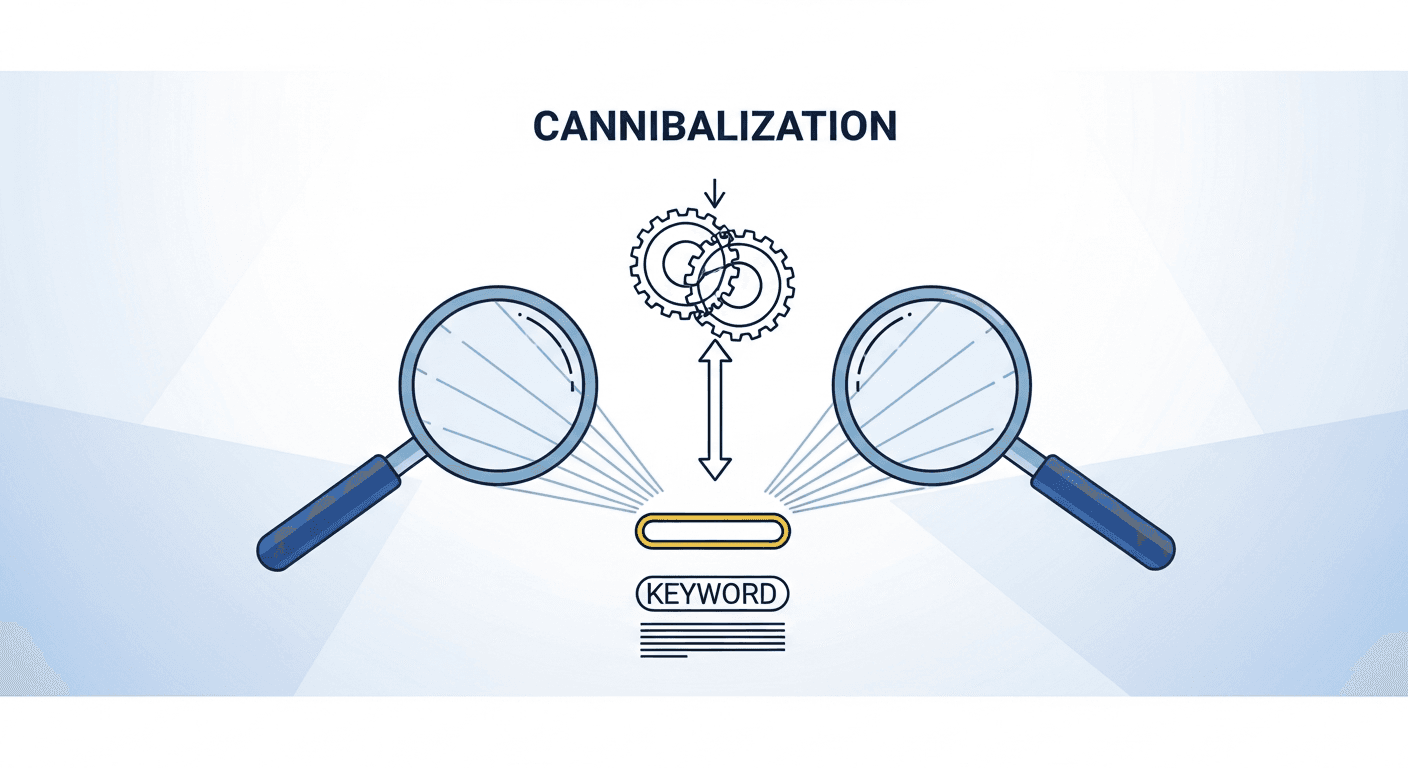
Keyword Cannibalization: Identify, Fix, and Prevent It
Don't let keyword cannibalization hurt your SEO. Learn to identify, fix, and prevent this common issue to boost your website's search performance today!
Read article
Generative Engine Optimization Tools: Your 2026 UK Guide
The top generative engine optimization (GEO) tools for UK businesses in 2026, and how to use them to get found in AI search answers.
Read articleReady to rank? Start free today.
Put your SEO on autopilot. No credit card, no installations — ready in 2 minutes.